Little wheel train I made with my lathe !!!

a virtual workshop for watchmakers and clockmakers

Postby jey66 » Tue Feb 23, 2010 11:21 pm

during vacation I home-made a small wheel train with my own lathe. it's the first time I try such a thing, and I want to share it with you all. Forgive any imperfection please and I do appreciate advice!! :lol:
the wheel train is, 2 pieces of teeth-wheel running between 2 wheel cocks. first came the making of the cocks.
they were made out of 40mm brass rod. first cut it into pieces, each 4mm in thickness (I sent the material to a local factory to carry this out, for my lathe is too smmal for that)
I then reduced the thickness to 3mm myself using a 4-jaw chuck


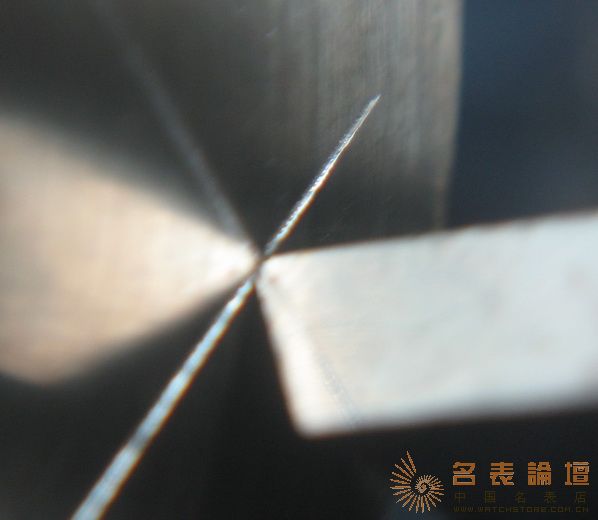
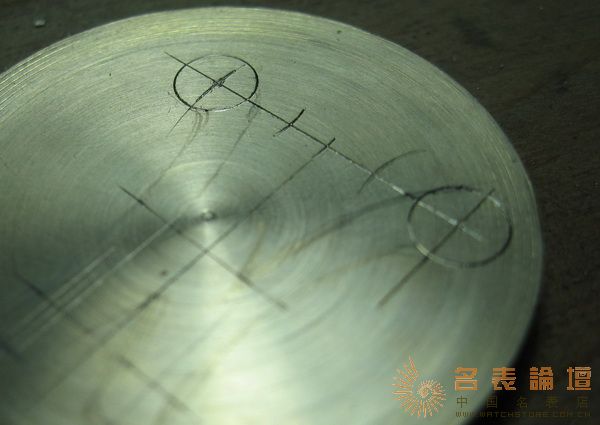
with the help of a face plate and a very sharp graver, I was able to draw the lines and locate each hole
Image

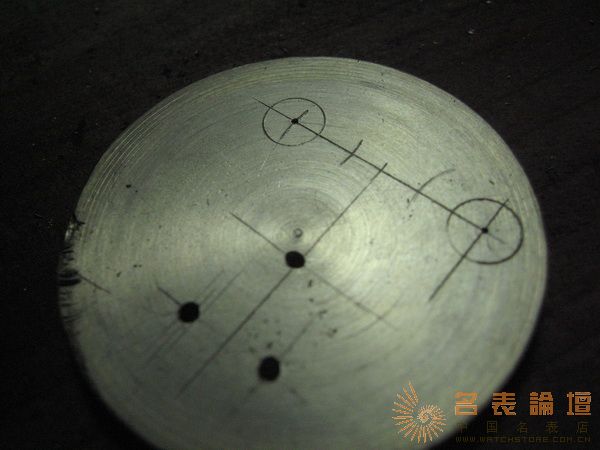
having finished drawing the lines and punching the location of holes, I went on to carry our the drilling (I used vertical milling attachment for this, for I unfortuately have got no vertical drilling machine)
Image

drilling finished (as you can see a hole ran out of size. failure!)
Image

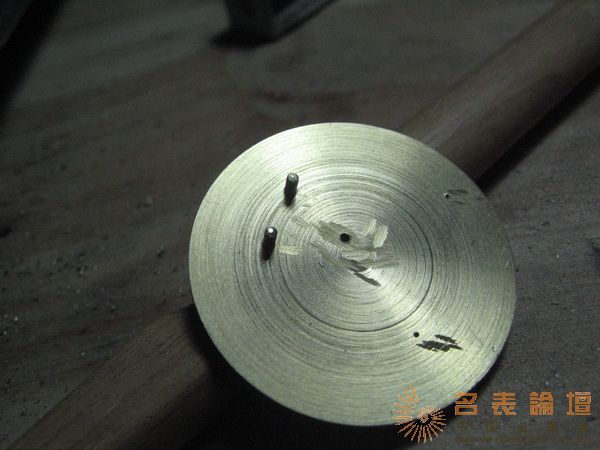
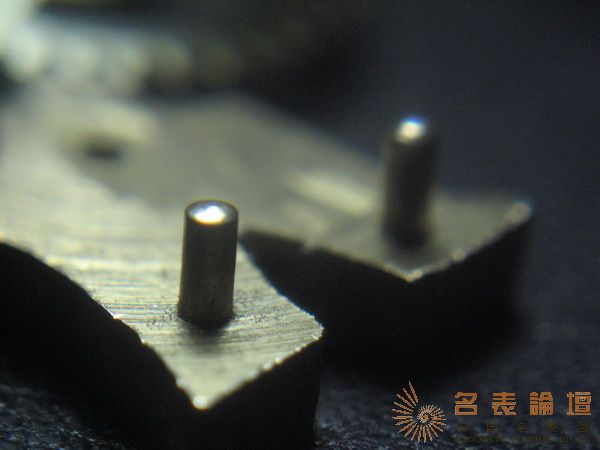
then in the 2 larger holes at the bottom, I fitede pins. the diameter of that brass bar used as the pin is slightly larger than that of the holes to ensure tight friction fit
Image

Image
jey66
 
Posts: 7
Joined: Sun Dec 06, 2009 3:02 am

Postby Paul Loatman » Sat May 08, 2010 1:20 pm

How did this turn out? Are you still working on this and what exactly is the wheel train for?

Also, for locating holes, i think a depthing tool is a good inexpensive tool to use, although they're a bit difficult to find they usually sell for around 100 USD.
-Paul
Paul Loatman
 
Posts: 222
Joined: Mon May 18, 2009 7:07 pm
Location: Modesto, CA

Postby jey66 » Sat May 22, 2010 12:25 am

Paul Loatman wrote:How did this turn out? Are you still working on this and what exactly is the wheel train for?

Also, for locating holes, i think a depthing tool is a good inexpensive tool to use, although they're a bit difficult to find they usually sell for around 100 USD.


it's nothing but a piece for practice to get myself familiar with the use of the lathe.
exactly I'm needing a depth tool. I read about a Bergeon one before, but that's too unafordable for me. still looking for a cheaper one
thank you
jey66
 
Posts: 7
Joined: Sun Dec 06, 2009 3:02 am

Postby Paul Loatman » Sat May 22, 2010 2:00 am

jey66 wrote:
Paul Loatman wrote:How did this turn out? Are you still working on this and what exactly is the wheel train for?

Also, for locating holes, i think a depthing tool is a good inexpensive tool to use, although they're a bit difficult to find they usually sell for around 100 USD.


it's nothing but a piece for practice to get myself familiar with the use of the lathe.
exactly I'm needing a depth tool. I read about a Bergeon one before, but that's too unafordable for me. still looking for a cheaper one
thank you


Do an ebay search for "depthing tool" and you'll find at least a few, although you'll probably have to correct it first, they're usually off by a few hundreds of a mm. I had to do that with one of mine.
-Paul
Paul Loatman
 
Posts: 222
Joined: Mon May 18, 2009 7:07 pm
Location: Modesto, CA

Postby jey66 » Mon Jun 07, 2010 10:14 am

discovered new problem ! can anyone give me a hand ?

using the faceplate of my watchmaker's lathe to turn parts that are off centered, the vibration is untoleratably big that I wonder there might be something wrong with it , even danger .

is it a commom situation ? how to avoid the vibration ?

Image
jey66
 
Posts: 7
Joined: Sun Dec 06, 2009 3:02 am

Postby Paul Loatman » Mon Jun 07, 2010 10:55 am

jey66 wrote:discovered new problem ! can anyone give me a hand ?

using the faceplate of my watchmaker's lathe to turn parts that are off centered, the vibration is untoleratably big that I wonder there might be something wrong with it , even danger .

is it a commom situation ? how to avoid the vibration ?

Image


Hello Jey,

I had the same problem when i first used one at school. We used regular 8mm WW lathes which were on those Borel mounts and not connected directly to a bench like most high-end precision lathes usually are. So we just went very slow when drilling/boring holes in off center things.

What sort of lathe are you using? If it has a pedal control for the motor than controlling the speed shouldn't be too much of a problem, if it's just a switch that turns it on to a set speed than i can see the problem you'd be facing.

In the end the only way to rectify it fully would be to make the lathe more sturdy by mounting it onto a sturdy bench, however if you can't do that then the only other way to go about it is to turn it slowly. Usually when i drill things smaller than 1mm i want to go very slow anyways due to the drill bit being very brittle from it's size, and in watchmaking holes under 1mm are very common.
-Paul
Paul Loatman
 
Posts: 222
Joined: Mon May 18, 2009 7:07 pm
Location: Modesto, CA

Postby jey66 » Tue Jun 08, 2010 10:33 am

Paul Loatman wrote:
jey66 wrote:discovered new problem ! can anyone give me a hand ?

using the faceplate of my watchmaker's lathe to turn parts that are off centered, the vibration is untoleratably big that I wonder there might be something wrong with it , even danger .

is it a commom situation ? how to avoid the vibration ?

Image


Hello Jey,

I had the same problem when i first used one at school. We used regular 8mm WW lathes which were on those Borel mounts and not connected directly to a bench like most high-end precision lathes usually are. So we just went very slow when drilling/boring holes in off center things.

What sort of lathe are you using? If it has a pedal control for the motor than controlling the speed shouldn't be too much of a problem, if it's just a switch that turns it on to a set speed than i can see the problem you'd be facing.

In the end the only way to rectify it fully would be to make the lathe more sturdy by mounting it onto a sturdy bench, however if you can't do that then the only other way to go about it is to turn it slowly. Usually when i drill things smaller than 1mm i want to go very slow anyways due to the drill bit being very brittle from it's size, and in watchmaking holes under 1mm are very common.


hello Paul

thank you so much fo the valuable advices
I'm now using a Chinese lathe C6104, and it has tow speed selections, unfortunately both too fast to reduce the vibration. I'm actually considering using a vertical milling machine to reduce the amount of off-centered turning on lathe faceplate

besides what's your lathe set-up ?
anyway thank you a lot for help !
would you mind I joining you on MSN ?
jey66
 
Posts: 7
Joined: Sun Dec 06, 2009 3:02 am

Postby Paul Loatman » Tue Jun 08, 2010 2:43 pm

jey66 wrote:hello Paul

thank you so much fo the valuable advices
I'm now using a Chinese lathe C6104, and it has tow speed selections, unfortunately both too fast to reduce the vibration. I'm actually considering using a vertical milling machine to reduce the amount of off-centered turning on lathe faceplate

besides what's your lathe set-up ?
anyway thank you a lot for help !
would you mind I joining you on MSN ?


No problem.

My lathe setup is a bit unorthodox, i use 2 separate lathes with one motor mounted on the base of a pantograph. It's good enough for me since i can work around any issues.

What's more important than stability is alignment of the drill bit in the tail stock with the headstock. obviously the drill bit isn't directly connected to the tail stock so you have to hold it with something, what do you use to hold the drill bit?

For watchmaking you need something that holds the bits with a friction fit to insure accuracy, i've tried holding drill bits with a drill chuck held in the tail stock but it didn't work well enough for watchmaking because the drill chuck wasn't able to hold the bit perfectly concentric. I use special pivot drill holders now, they're designed specifically for holding pivot drills which is all i use now for drilling. I don't use spiral drills. The holders have a single size capacity of 2mm, so i have to make all my own drill bits out of 2mm drill stock. Another option is getting a tailstock that can hold split chucks the same as the headstock can.

The advantage of using the face plate on a lathe for drilling is that the action that occurs when you're drilling is more like boring, this is because even if your drill bit is off center as long as the drill bit is rigid enough the hole will end up getting cut perfectly concentric with the centering point because the drill bit isn't turning, instead the piece is turning on the face plate. This also means that centering the piece has to be done to near perfection. If you can see the center punch (or whatever you use to mark the holes) wobbling at all with a 10x loupe than it's not good enough.

Making my own drill bits gives me an advantage because i can make them very short, as short as possible in fact. This keeps them very rigid and able to "bore" holes rather than just drill them.

I don't use MSN. I'm on AIM though, there's a link under my signature for it.

-Paul
Paul Loatman
 
Posts: 222
Joined: Mon May 18, 2009 7:07 pm
Location: Modesto, CA

Postby whiskeybelly » Wed Jun 09, 2010 6:30 am

Off balance work when using a faceplate is a real pain. I use a faceplate a lot but with a bit different equipment:


This is a short Schaublin 102 bed, with a holder for quills that also fit into my jig borer. The centering gets done using the scope in the jig borer, turning the faceplate and tapping the work into position. The work is superglued to brass supports like in the photo. This way there is no clamping on the actual part and no risk of damage. You can't really see it but there is a boring bar in the toolpost that is sized to do holes down to around .40mm.

Even with this setup, which is massive (the cross slide alone weighs around 25 pounds), the whole bench starts hopping when the work is far off center. On this faceplate there are tapped holes where weights can be added, and I keep a little box of weights and bolts ready for when needed. I still can't turn nearly as fast as I would holding the work in a collet or chuck; perhaps 500rpm tops.

Faceplates for watchmaker's lathes seem to never have these tapped holes, and if I were to go back to doing work with one that's the first thing I would do- drill and tap a bunch of holes in it.

On centering- you don't need anything fancy if you want to use a microscope. Edmund Scientific and various other 'surplus' sources have loads of scopes that can be adapted for this work. All that's needed is a single cross hair, or any visual reference in the eyepiece be it concentric circles or whatever. The scope can be situated in something as unceremonious as a blob of Rodico on a chunk of wood on the lathe bed. When viewing the hole or pip to be centered, the eccentricity will be readily apparent against the hairline in the scope. The scope can be moved so that the line is near the edge of the hole (one reason a fixed scope in the tailstock isn't a first choice) which makes centering a snap. With my setup I can center to within a couple of microns in less than 30 seconds. I love scopes :) .
whiskeybelly
 
Posts: 46
Joined: Sat Sep 19, 2009 8:17 pm
Location: Europe

Postby Dagoberg » Wed Jun 09, 2010 2:16 pm

Hi Whiskeybelly,

I have a Schaublin 70, but no scope. Do you have an adress for Edmund Scientific, all I can get on the web is a toystore.

Oskar
Dagoberg
 
Posts: 8
Joined: Sun Nov 04, 2007 2:15 pm
Location: Jönköping, Sweden

Postby whiskeybelly » Wed Jun 09, 2010 4:50 pm

Dagoberg wrote:Hi Whiskeybelly,

I have a Schaublin 70, but no scope. Do you have an adress for Edmund Scientific, all I can get on the web is a toystore.

Oskar


Ah, it's been well over a decade since I bought there- it's Edmund Optics for the industrial division. Here's a page showing a scope tube similar to the last one I bought. Uses standard eyepieces and objectives (DIN norm).

http://www.edmundoptics.com/onlinecatal ... uctid=1548

If you do some digging around on Ebay you can find all sorts of scopes. These are a few that came from there, or Ricardo (Swiss auction site):


The boxed scope is a tiny thing that clamps onto a milling machine spindle. To its right top is an English scope that came from some unknown machine. Below that are two 'standard' scopes with 25mm bodies like are supplied with Schaublin milling attachments. One is Isoma, in a strange mount, the other is an old beat up Leitz. At the bottom left is a tailstock scope from Isoma and also supplied by Schaublin. This is a great scope and perfect for centering as has a small x/y slide mounted behind the optics. The last one is an Isoma with an 8mm collet shank.

None of these- with the exception of the x/y tailstock mount Isoma were over $100. They are out there- just gotta find them! Any one of them could be used for faceplate centering as there is no 'precision' coming from the scope in this application, it's simply a way to see the hole being centered. A magnification of 50x or so coupled with a cross hair reticle will allow centering easily within microns. If you want to get fancy there are loads of surplus linear stages to be found on Ebay and with a little work a dedicated centering scope with micrometer adjustment could be made for little trouble or cost.
whiskeybelly
 
Posts: 46
Joined: Sat Sep 19, 2009 8:17 pm
Location: Europe

Postby jey66 » Thu Jun 10, 2010 9:30 am

hello

so much I appreciate your advice !
I've actually considered and tryed turning at low speed ,but unfortunately the lowest speed selection of my lathe is 1680r/m , much too high than toleratable. to work it out and improve the quality of drilling ,I plan to by a vertical drill press. hopefully it will reduce the use of faceplate.
p.s I'm in China. do anybody else live here ?
jey66
 
Posts: 7
Joined: Sun Dec 06, 2009 3:02 am

Postby Jacob Sobell » Thu Jun 10, 2010 1:22 pm

Cheapest is a centering stick


A loupe works well also.


Best is a scope. This is a Skoal centering scope from MSC. Fits well in a 8mm lathe. Used this nicely in my Cowells when I had it.


This is what I use in my Schaublin 70. I like this because it has a LED light that fits the end.


You can also light the piece from behind like on this Prazi. I have a bench lamp that I use also.
[/img]
Jacob Sobell

User avatar
 
Posts: 20
Joined: Sun Jan 24, 2010 12:37 am
Location: Minnesota
  • Website

Postby Dagoberg » Fri Jun 11, 2010 11:26 am

Thank you, Whiskeybelly and Jacob, for your answers.
I will try with the web adress and also Ebay.

Oskar
Dagoberg
 
Posts: 8
Joined: Sun Nov 04, 2007 2:15 pm
Location: Jönköping, Sweden

Postby Ophiuchus » Fri Jun 11, 2010 3:15 pm

To those of you I see mounting loupes with some sort of blue bonding stuff-

I recommend trying Shapelock compound. It comes in plastic pellets, 500g for about 25$, it's a thermoplastic. At 150 Degrees F, it becomes clear and moldable like silly-putty or playdoh. It hardens to opaque white, is self-lubricating, and tough as nails- it's machineable, tapable ABS plastic.

You can heat the stuff up again and again- near infinite reuse. It makes perfect molds of stuff too. I love the stuff, and I can use it to make custom jigs/workholding for any piece of metal or wood I have. Since it's self-lubricating hard ABS, it also won't mar any of your work.

The stuff is incredible- you can only get it from the company's website, but I highly recommend it. Just because you choose a less precise option in loupes over scopes, doesn't mean they have to be loose. Shapelock would hold those dead solid at any angle you want, and you could keep adjusting it by reheating with a heat gun, or in hot water.

Just an idea. (I'm not affiliated with them, I just love their product)
Ophiuchus
 
Posts: 61
Joined: Wed Jul 01, 2009 2:31 pm

Next

Return to On The Bench


  • Who is online
  • Users browsing this forum: No registered users and 3 guests

cron