
I now have every published photograph/article of Gene Clark's watches that are out there. It a shame because they are all from 80s and 90s watch magazines which frustratingly have poor quality photographs of his work. Especially, his tourbillon with remointour (all within the same carriage).
Curtis, I know you said you knew him. What are the chances of you doing a magazine article (or small book) with today's high resolution detailed pictures of his work?
The last photograph published in a magazine I needed was the cover of January 1998's Horological Times (I think it was No. 7, but maybe No. 4??)
I bought the whole year for 1998's Horological Times (one month's cover is Dufour's Duality, long before he became a celebrity). But I was stunned to see in May's issue an absolutely prime example of a handmade (nearly every part) partially-skeletonized tourbillon with Earnshaw-type detent escapement and up-down indicator made by a man by the name of Robert Doris. Who is Robert Doris and why do I get absolutely nothing when I google his name? Where does he live?
We need some more high-quality pictures and articles on these Americans who have done (unfortunately past-tense in Gene Clark's case) or are doing world-class George Daniels inspired watchmaking with very impressive results.
(Incidently, I also have every book written by George Daniels [some of which are very obscure] Too bad I don't have even one really good watch like these men make!
~Bryan
My Gene Clark Collection is Complete
a virtual workshop for watchmakers and clockmakers
24 posts
• Page 1 of 2 • 1, 2
 by bryanhiler » Mon Jan 21, 2008 4:36 pm
-
bryanhiler
- Posts: 63
- Joined: Wed Dec 13, 2006 10:18 am
- Location: Notre Dame, Indiana
by Curtis » Mon Jan 21, 2008 10:47 pm
Hi Bryan,
I would love to write an article about Gene's work, but getting high quality photos is a problem. I asked Gene about this possibility in 2001 or 2002 and he said he would support this article, but getting photos would not be easy. If we can find the owners of his watches, it would be my pleasure to write a super article about one of America's finest watchmakers.
Regarding Robert Doris, as I recall, he is now retired and his watches and clocks have remained under the radar because they were made for his pleasure and before the recent internet exposure now available to such makers. There used to be a website for Robert Doris, but it is not available anymore. ;-(
http://ahci.watchprosite.com/?show=foru ... =359142&s=
http://ahci.watchprosite.com/?show=foru ... =358962&s=
For my curiosity, what is your collection of Gene Clark articles? Just in case I am missing some.
Cheers,
Curtis
I would love to write an article about Gene's work, but getting high quality photos is a problem. I asked Gene about this possibility in 2001 or 2002 and he said he would support this article, but getting photos would not be easy. If we can find the owners of his watches, it would be my pleasure to write a super article about one of America's finest watchmakers.
Regarding Robert Doris, as I recall, he is now retired and his watches and clocks have remained under the radar because they were made for his pleasure and before the recent internet exposure now available to such makers. There used to be a website for Robert Doris, but it is not available anymore. ;-(
http://ahci.watchprosite.com/?show=foru ... =359142&s=
http://ahci.watchprosite.com/?show=foru ... =358962&s=
For my curiosity, what is your collection of Gene Clark articles? Just in case I am missing some.
Cheers,
Curtis
-
Curtis
- Site Admin
- Posts: 679
- Joined: Mon Oct 23, 2006 9:33 pm
- Location: New Hampshire, USA
by bryanhiler » Tue Jan 22, 2008 11:26 am
Thanks for your comments. We might be able to acquire the names of the two buyers who bought the two watches auctioned last year (I know auction companies wouldn't just hand out their clientele’s names and addresses, but who knows, they might forward a letter to the buyers???).
I'm at work right now, so I don't have my collection of articles with me, but I'll list them all out tomorrow.
Thanks for what you do. I always get a good feeling when I open a watch magazine and see an article authored by you because I know it will be of the highest quality and extremely interesting.
~Bryan
I'm at work right now, so I don't have my collection of articles with me, but I'll list them all out tomorrow.
Thanks for what you do. I always get a good feeling when I open a watch magazine and see an article authored by you because I know it will be of the highest quality and extremely interesting.
~Bryan
-
bryanhiler
- Posts: 63
- Joined: Wed Dec 13, 2006 10:18 am
- Location: Notre Dame, Indiana
by Curtis » Wed Jan 23, 2008 9:32 am
Hi Bryan,
If the owners can be found and are willing... I'm in!
I look forward to your list and feel free to post any and all pics you have, too.
Thanks for the kind words, regarding my articles. It is much appreciated.
Cheers,
Curtis
If the owners can be found and are willing... I'm in!
I look forward to your list and feel free to post any and all pics you have, too.
Thanks for the kind words, regarding my articles. It is much appreciated.
Cheers,
Curtis
-
Curtis
- Site Admin
- Posts: 679
- Joined: Mon Oct 23, 2006 9:33 pm
- Location: New Hampshire, USA
by bryanhiler » Wed Jan 23, 2008 7:49 pm
I'll post a bunch of pictures, but things have been crazy and it will be a few days.
As far as I can tell, this is all that has been written about Gene Clark (with the exception of a blurb on McKenzie's website that shows the watch he engraved for Gene, but it's just a sample of the engravers work and doesn't have any unique photographs). Lynton McKenzie may have private photographs he did when he had the watch?
1. "The Lost Art of Breguet" by Peyton Autry in the April 1988 (volume 30/2 Number 253) edition of NAWCC Bulletin
*The article starts with a history of A.L. Breguet. He says that since WWII watchmaking as innovative and artistic is basically dead (along with many Jewish watchmakes and 50 million other people who died as a direct result of the war. - my commentary)
*He starts his short list of high-quality (Breguet-quality watchmakers) with George Daniels (1926-). Then he talks about the "little-known" Parisian by the name of Francois-Paul Journe (b.1959 "in 1988 at the time of publishing he was "29".)
*The third Breguet-quality is an American named Gene Clark (1948-2006)
(Have to stop for a few minutes, but will continue . . . )
As far as I can tell, this is all that has been written about Gene Clark (with the exception of a blurb on McKenzie's website that shows the watch he engraved for Gene, but it's just a sample of the engravers work and doesn't have any unique photographs). Lynton McKenzie may have private photographs he did when he had the watch?
1. "The Lost Art of Breguet" by Peyton Autry in the April 1988 (volume 30/2 Number 253) edition of NAWCC Bulletin
*The article starts with a history of A.L. Breguet. He says that since WWII watchmaking as innovative and artistic is basically dead (along with many Jewish watchmakes and 50 million other people who died as a direct result of the war. - my commentary)
*He starts his short list of high-quality (Breguet-quality watchmakers) with George Daniels (1926-). Then he talks about the "little-known" Parisian by the name of Francois-Paul Journe (b.1959 "in 1988 at the time of publishing he was "29".)
*The third Breguet-quality is an American named Gene Clark (1948-2006)
(Have to stop for a few minutes, but will continue . . . )
-
bryanhiler
- Posts: 63
- Joined: Wed Dec 13, 2006 10:18 am
- Location: Notre Dame, Indiana
by bryanhiler » Wed Jan 23, 2008 9:12 pm
Gene Clark was born in 1948, lived at the time of publishing in southwestern Colorado. Like Daniels and Journe, he began by restoring fine, complicated watches. He wore a "rather innocuous looking Swiss calendar watch. It had 22 jewels until . . . he rebuilt it, making all new jewels and adding 39 jewels. One at each available pivotal point, to end up with a watch with 61 working jewels." (HE MADE ALL THE JEWELS HIMSELF!!!!)
He worked professionally (1966 - 1976) as a gun lock maker (in case you don't know, a gun lock is the mechanical system which fires the gun and ejects the spent round while loading a new round) and also as a restorer of antique and European sporting arms. In 1974 his interest changed to working on watches and in 1976 he "returned home to Colorado" to become a full-time watchmaker.
He was heavily influenced by Breguet and while it doesn't say it specifically, you can see George Daniels' fingerprints (in the form of techniques described in Daniels' book "Watchmaking") all over his watches. (Interesting that Journe and Smith, two of the greatest living watchmakers, took their first Daniels "Watchmaking" inspired watches to Daniels for his approval. The book "Watchmaking" by George Daniels was the direct text book for all of these "master watchmakers", though I don't know if Gene Clark ever met George Daniels?). (Which is why I have practically memorized that book I have read it so much - my commentary.)
Aside: I pray that George Daniels will allow a detailed documentary of his making of a watch being made (50 hours, not a 1/2 tour of his shop), Also, if possible, I hope he writes another book delving deeper into his techniques. Things like Daniels unique perpetual calendar, minute repeating, chronograph, remontoire, etc. are shown on his watches and some have a brief technical drawing, but totally skipped over when it comes to any detailed theory and his insights.
The watch featured in this article is No. 7, which required 4,000 hours over a 40 month time span. The escapement in the tourbillon is of Earnshaw type with special Peto cross detent. The overall diameter is 63.5 mm and 20.5 mm thick (case). All the gold and silver are made by hand with the bezels being 19k gold. (My note: This case is among the most unique, and beautiful case I have ever seen. It may be THE most beautiful pocket watch case I've ever seen.) Every part of the watch, including gold alloying, jewel making, mainspring making are made by Gene Clark's hand (I am not sure about the hairspring) Lynton McKenzie, who has an extensive history of the finest gun engraving, did the engraving of the watch which include a "secret signature" on the engine-turned dial (a sunburst pattern for which Clark designed his own machine to engrave it since those machines are nearly impossible to get, and impossible to get at a reasonable price.
Pictures and the descriptions as printed in the magazine:
Figure 1: Early development stage of the Clark Tourbillon, February 1985. Spring balance and barrels were later refined. (A typical double-barrel setup with barrels, barrel cock, center wheel not installed, but third wheel can be seen through a cutout and tourbillon.

I will continue later . . .
He worked professionally (1966 - 1976) as a gun lock maker (in case you don't know, a gun lock is the mechanical system which fires the gun and ejects the spent round while loading a new round) and also as a restorer of antique and European sporting arms. In 1974 his interest changed to working on watches and in 1976 he "returned home to Colorado" to become a full-time watchmaker.
He was heavily influenced by Breguet and while it doesn't say it specifically, you can see George Daniels' fingerprints (in the form of techniques described in Daniels' book "Watchmaking") all over his watches. (Interesting that Journe and Smith, two of the greatest living watchmakers, took their first Daniels "Watchmaking" inspired watches to Daniels for his approval. The book "Watchmaking" by George Daniels was the direct text book for all of these "master watchmakers", though I don't know if Gene Clark ever met George Daniels?). (Which is why I have practically memorized that book I have read it so much - my commentary.)
Aside: I pray that George Daniels will allow a detailed documentary of his making of a watch being made (50 hours, not a 1/2 tour of his shop), Also, if possible, I hope he writes another book delving deeper into his techniques. Things like Daniels unique perpetual calendar, minute repeating, chronograph, remontoire, etc. are shown on his watches and some have a brief technical drawing, but totally skipped over when it comes to any detailed theory and his insights.
The watch featured in this article is No. 7, which required 4,000 hours over a 40 month time span. The escapement in the tourbillon is of Earnshaw type with special Peto cross detent. The overall diameter is 63.5 mm and 20.5 mm thick (case). All the gold and silver are made by hand with the bezels being 19k gold. (My note: This case is among the most unique, and beautiful case I have ever seen. It may be THE most beautiful pocket watch case I've ever seen.) Every part of the watch, including gold alloying, jewel making, mainspring making are made by Gene Clark's hand (I am not sure about the hairspring) Lynton McKenzie, who has an extensive history of the finest gun engraving, did the engraving of the watch which include a "secret signature" on the engine-turned dial (a sunburst pattern for which Clark designed his own machine to engrave it since those machines are nearly impossible to get, and impossible to get at a reasonable price.
Pictures and the descriptions as printed in the magazine:
Figure 1: Early development stage of the Clark Tourbillon, February 1985. Spring balance and barrels were later refined. (A typical double-barrel setup with barrels, barrel cock, center wheel not installed, but third wheel can be seen through a cutout and tourbillon.
I will continue later . . .
-
bryanhiler
- Posts: 63
- Joined: Wed Dec 13, 2006 10:18 am
- Location: Notre Dame, Indiana
by bryanhiler » Thu Jan 24, 2008 3:19 pm
A technical description of No. 7 before continuing the illustration/photograph descriptions (note, all information is attributed to Peyton Autry in his article "The Almost Lost Art of Breguet", unless I use ( ) to insert a comment of my own:
This watch, No. 7, was started in December of 1983 and completed in March of 1987.
The carriage & escapement contain 80 parts. Total weight 1/16th of an ounce. Balance screws are 16K gold. Chronometer rating nuts are Iridium. Balance and detent are stainless steel. The balance spring, passing spring and twin detent springs are in Elinvar. Balance rollers are jeweled. Carriage is heat-treated carbon steel. Carriage rotates in 60 seconds EXACTLY. Carriage counterweight is 22K gold. All nickel parts are Rhodium plated. All ruby parts were made by Clark. Balance jewels are permanently fixed. Cap jewels have oil retention grooves. Hairspring stud is adjustable for holding the spring with no distortion. Adjustment for isochronism is also made on this assembly. The escape wheel is hard brass. Two mainsprings wound by a single (female) geared arbors. Both springs are wound at once using a hand-made matching, numbered gold ratchet key. (Uncommon for any modern tourbillon that I am aware of): the watch has a mechanism that locks the balance such that it cannot flop around when not wound.
Stopworks are located on top of the barrel (below the barrel cock, opposite side as the teeth). The escape wheel potence and center wheel run on the same plane to help slim down the watch. Breguet usually made his movements 62 mm in diameter to give the proportional illusion of the watch being thinner. Clark's movement is 58 mm and 10 mm thick (Basically, Clark was able to make the watch a bit thinner than Breguet's tourbillons, and therefore compensated by reducing its diameter . . . in all giving a smaller watch with the same balanced proportions.)
Gene Clark believed that a tourbillon with a detent should NEVER have a regulator.
Plate gilding was done using the gold cyanide process which gives a better look (so they say . . . hopefully that didn't play a part in his death?)
Clark had to make all the gear cutters himself. He made jigs and fixtures for making the jewels. He made his own rose-engine to turn the dial and the hairspring (I have never heard of a rose-engine being used to make a hairspring? If someone can explain, I'd love to hear.) With this watch, the only thing he didn't make was the mainsprings. (Earlier I said he did, but that must have been on one or all of the other watches?)
Figure 2A and 2B "Two views of the initial Clark One Minute Tourbillon, February 1985. Note the carriage and escape wheel have rotated 90 degrees, equivalent to 15'."

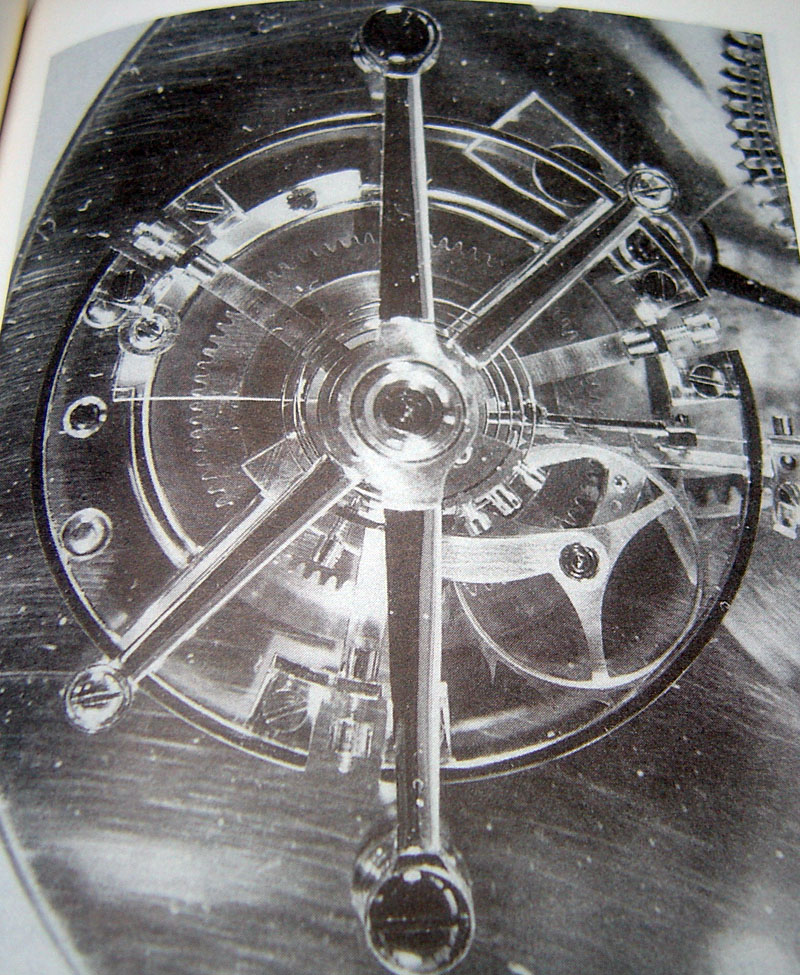
Figure 3 "Variation of Peto's Cross Detent escapement on initial configuration of No. 7 tourbillon."

Figure 4 "Close-up of final balance configuration, February 1986. Note the cut-down balance wheel rim. Gilding, signature, numbers and other parts had not been completed."

Figure 5 "Final basic configuration of Clark Tourbillon, February 1986. Note revised barrels and lighter balance."

Figure 6 "The spring detent tourbillon is characteristically larger than an ordinary pocket watch, yet not large in appearance. Overall cased diameter is 63.5 mm."

Figure 7 "Below tourbillon carriage"
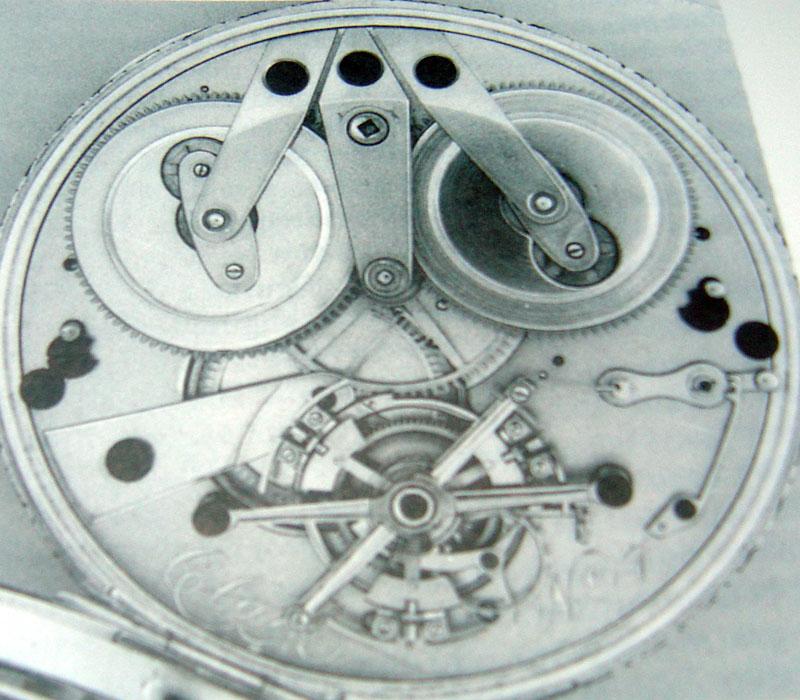
Figure 8 "Engraved area of back cover is sterling silver. Bezels and center are 19K gold."
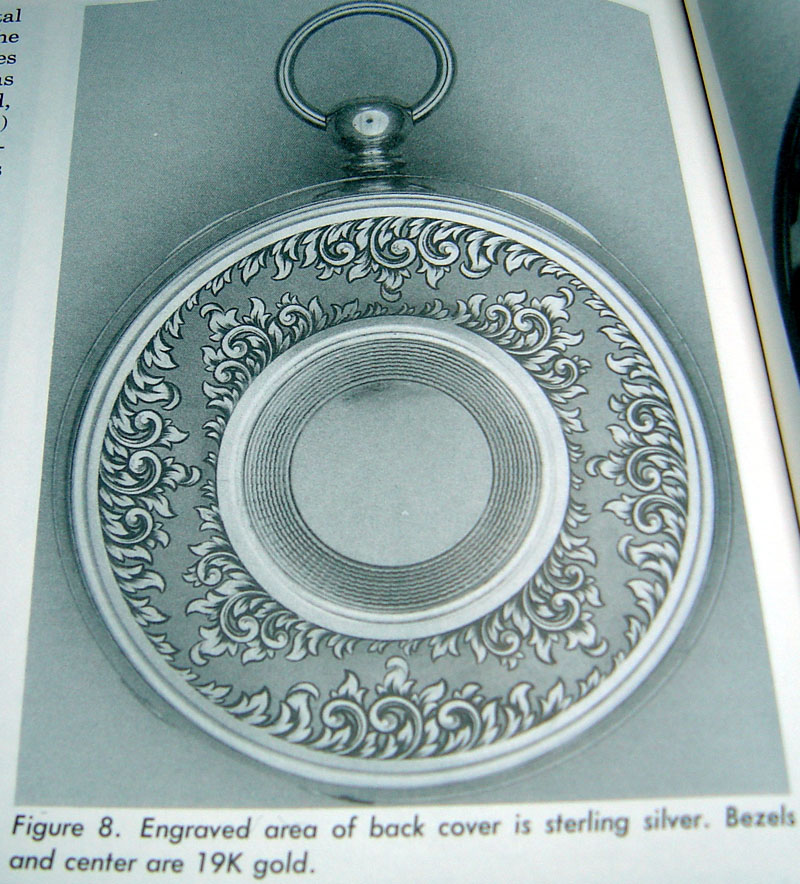
Figure 9 "Engraved areas of the case band and back cover are sterling silver. Bezels and center, pendant and bow are 19K gold alloyed by Clark"
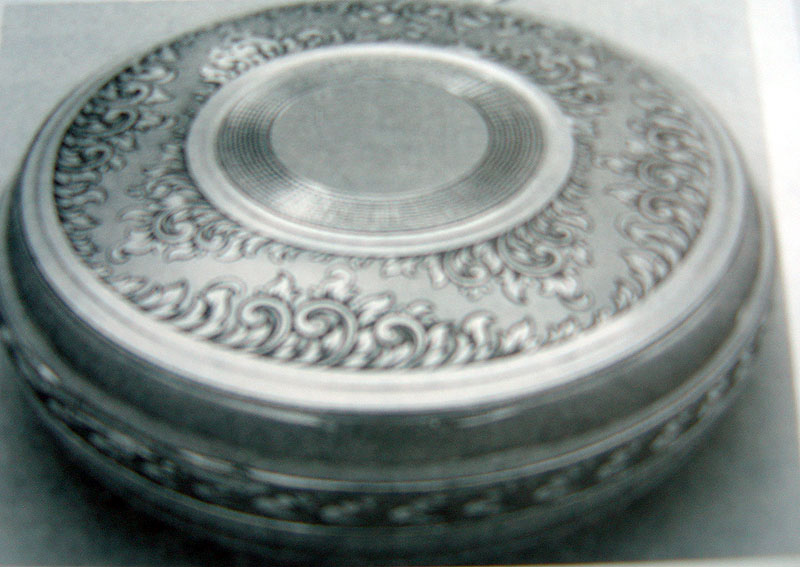
Figure 10 "Angular perspective of tourbillon. Note carriage is in the locked position

Figure 11 "Inside back cover is signed "Clark No. 7 USA"
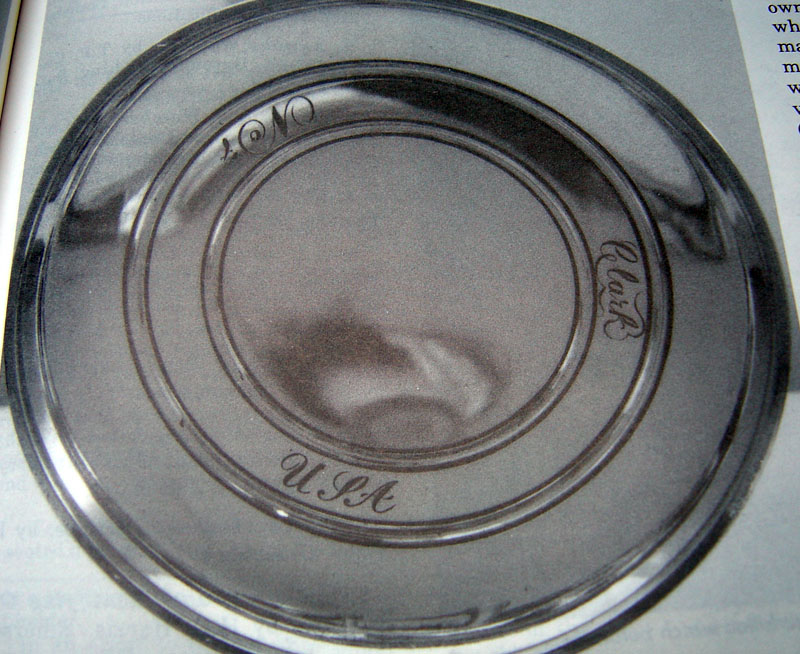
Figure 12 "Dial is (silver) whitened then lacquered
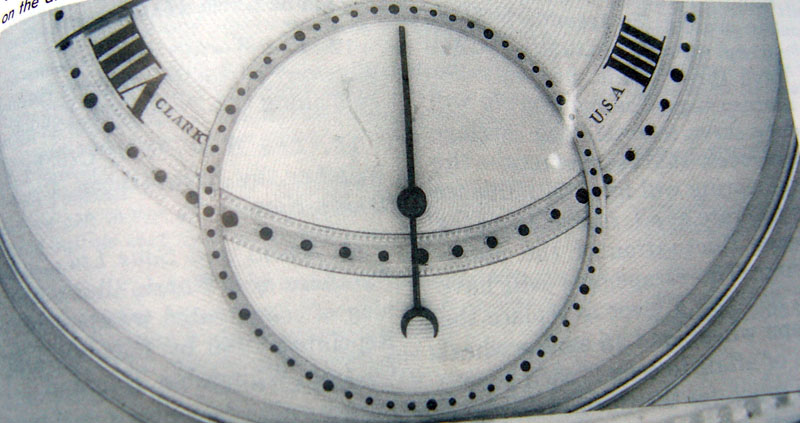
Figure 13 "Maker's signature next to the VIII on the dial; USA is engraved next to the III."
(no pics)
Figure 14 "Breguet-style "tipsy" ratchet key. Bottom end winds. Top end sets the hands. Center is a large jewel. "No. 7" is engraved on band."
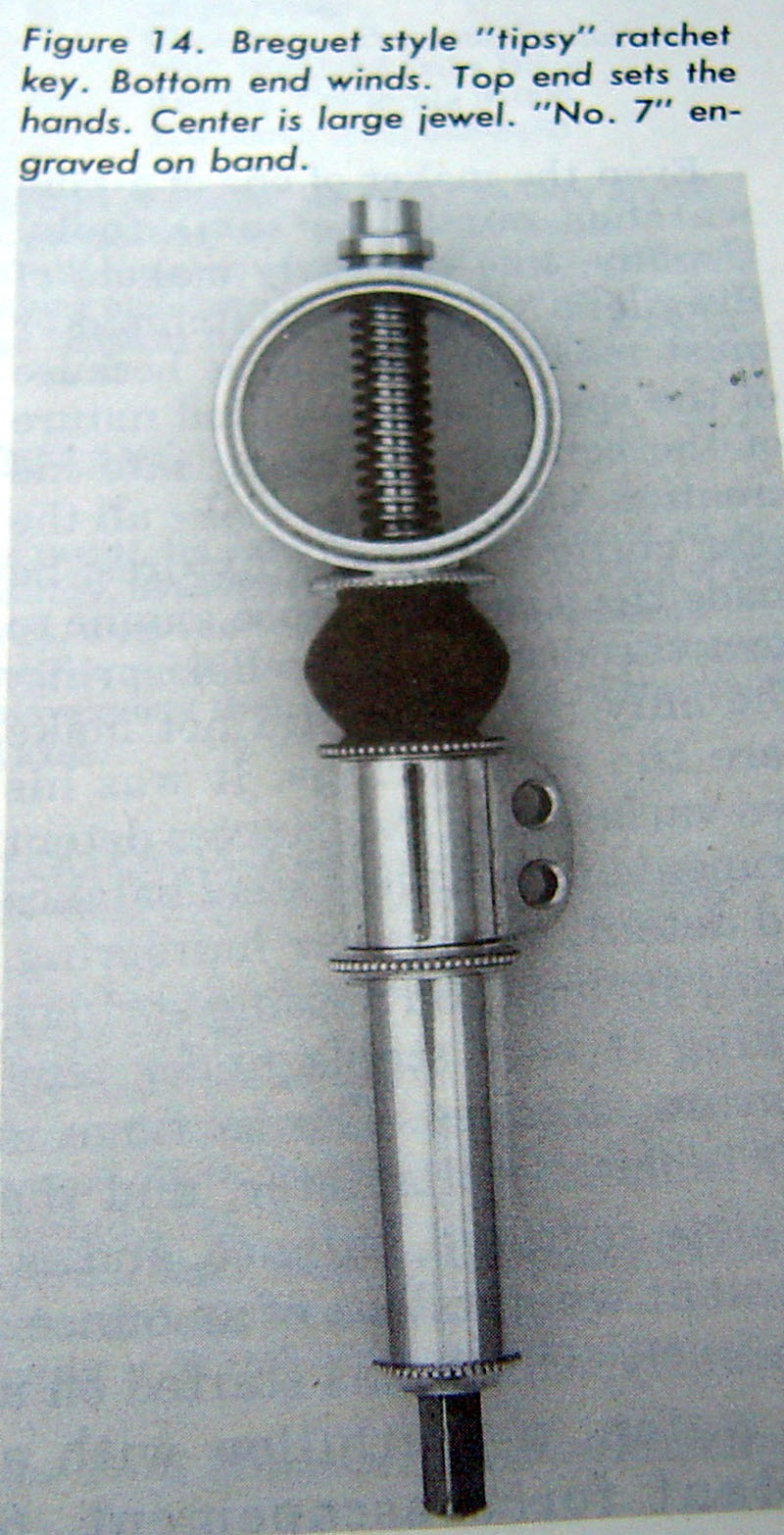
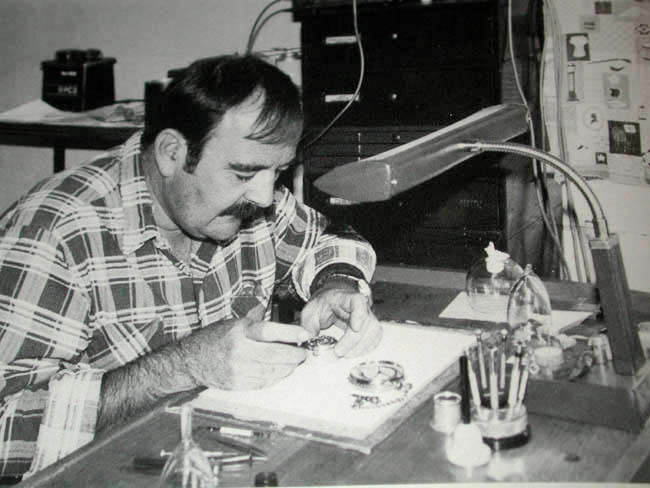
Figure 15 "Gene Clark at his bench, his tourbillon watch before him."
Note: In References, no books, periodicals, etc. on Gene Clark are included.
~~~~~~~~~~~~~~~~~~~~~~~~~~~~~~~~~~~~~~~~~~~~~
February 1990 NAWCC Bulletin
Back cover: Picture of the tourbillon carriage of "Gene Clark's "No. 4" which is currently in the making. The diameter of the outer gear is 31 mm."

Note: This is the most beautiful tourbillon carriage I have ever seen in my life. The remontoir is incorporated within the carriage.
~~~~~~~~~~~~~~~~~~~~~~~~~~~~~~~~~~~~~~~~~~~~~~
April 1992 NAWCC Bulletin
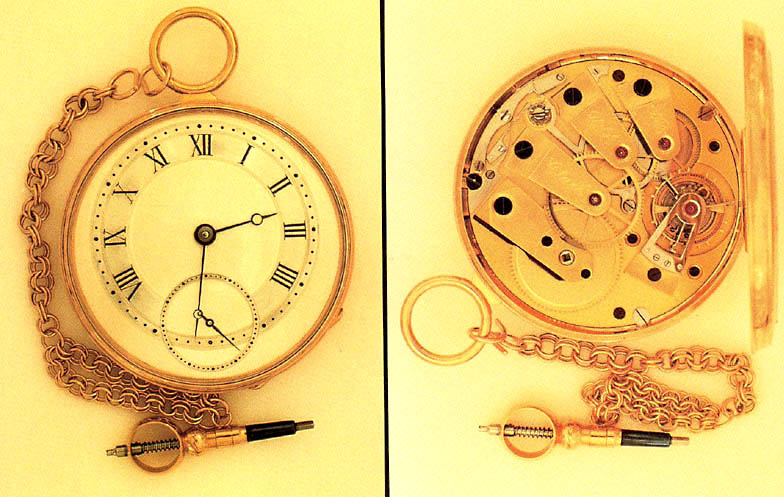
Picture of No. 4 on Front Page with back open showing tourbillon and barrel. Also, chain and ratchet key.
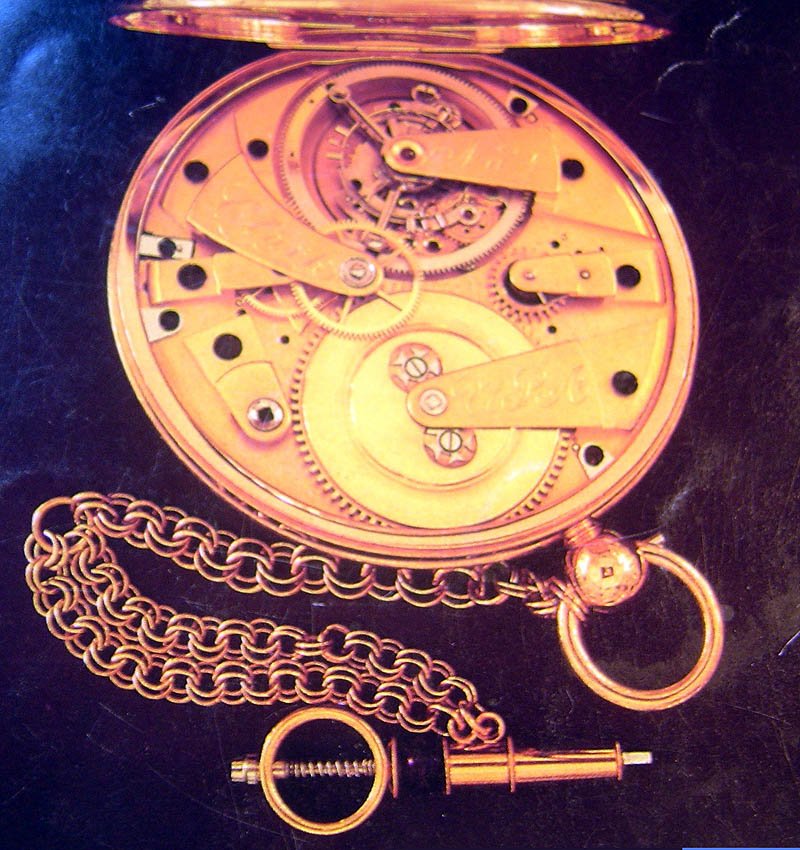
"The Almost Lost Art of Breguet Part II (The Clark Constant Force Tourbillon Watch" by Peyton Autry
(Note: Clark's numbering system is not chronological. No. 7 was completed in 1987 while No. 4 was completed in 1991.)
Derrek Pratt is mentioned as another Breguet-level watchmaker. "We will undoubtedly see and hear more of Derek Pratt in the future." I really haven't heard much about him, does anyone know if there have been any internet articles that show his work? Another Breguet-level watchmaker that I think should get a spot on Tempered is Christian Klings. In a world of watchmaking talent, Christian Klings is definitely near the top.
Okay, on to No. 4:
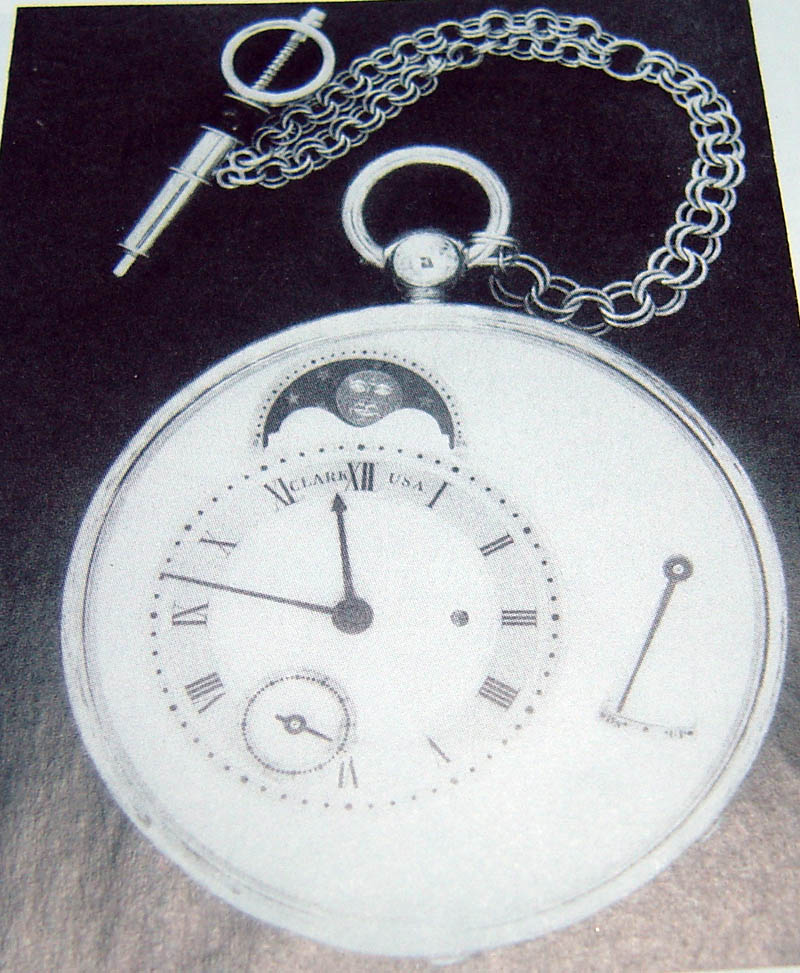
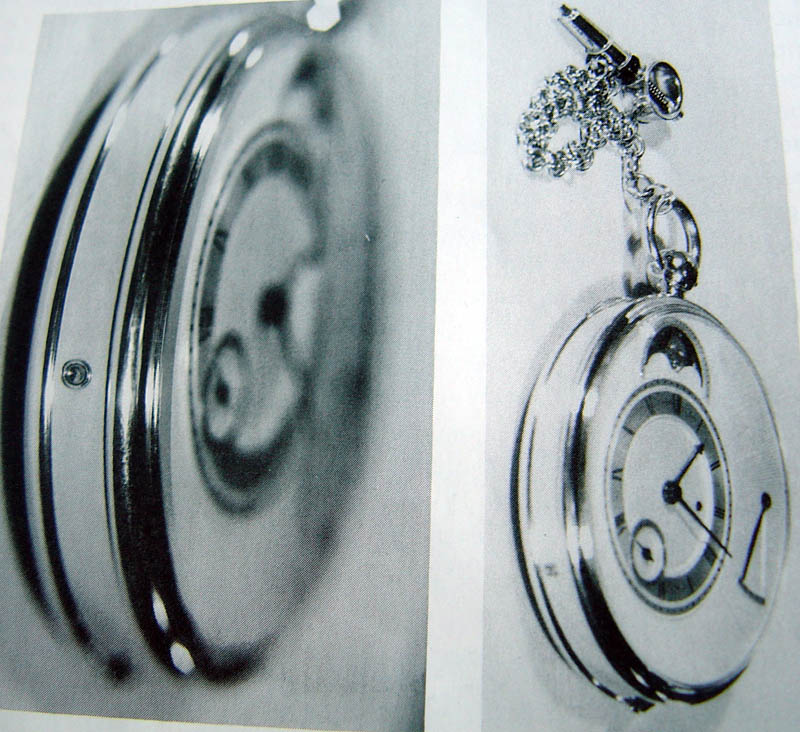
65mm case with split gold chain and ratchet Breguet-style key.
Whereas Clark estimated No. 7 to have taken him 4,000 hours. No. 4 is estimated at a mind-boggling 9,100 hours.
Single barrel is wound by inserting the male key into the square next to the spring barrel and turning counter-clockwise. The watch is set by placing the female part of the key onto the square on the center wheel cock.
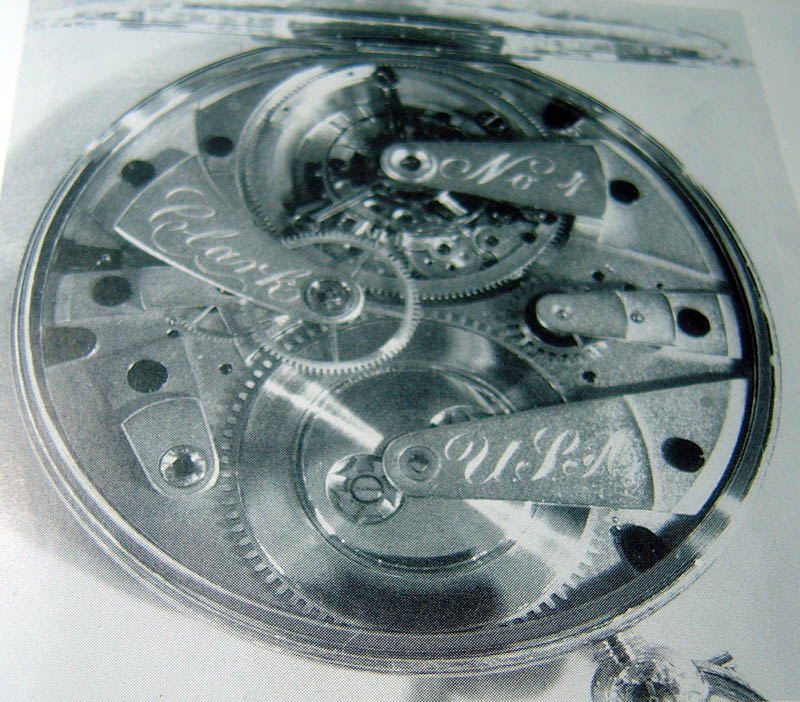
The gear-toothed tourbillon carriage rotates once every 4 minutes. Part of the 4-minute rotation reasoning is that the single barrel would not have been able to store enough energy for a 1 minute tourbillon and still have a reasonable endurance level (36 hours, I think?)
The case back, case band, bezel, pendant and bow are all 18K pink gold -alloyed and rolled by Clark himself.
Unlike No. 7's large Center and Third wheels, the power-train transmission is done through at least 3 smaller wheels.
The Tourbillion cock is a large all brass piece with "No. 4" engraved in script on it.
The major wheel cock is also brass and has the name "Clark" engraved in script on it.
The barrel cock has "USA" engraved in script on it.
The watch has an Up/Down indicator (the same style as Daniels and Smith)
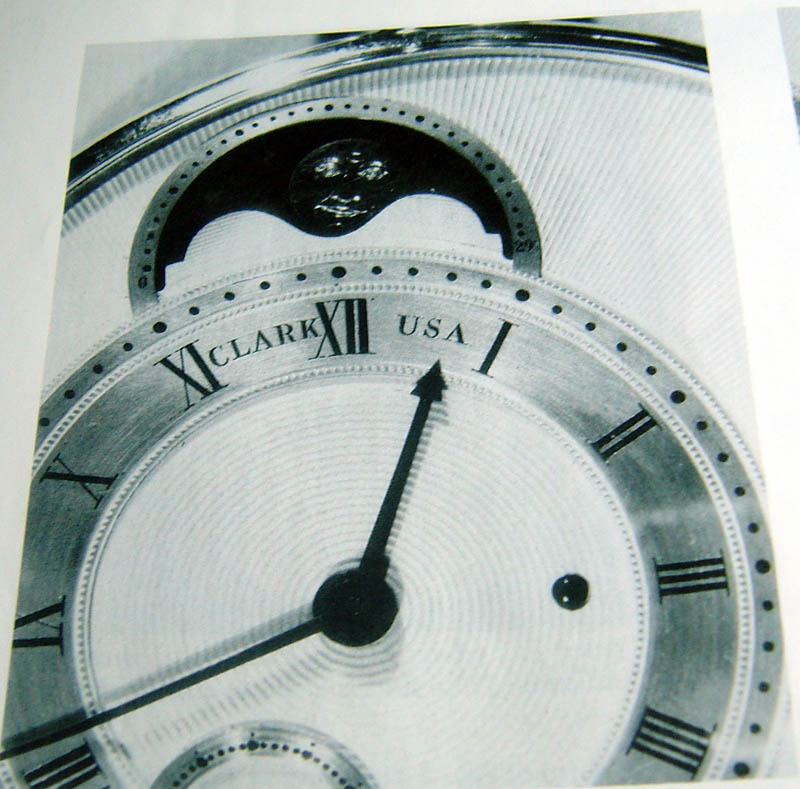
The Hour hand has an arrow at the end while the Minute hand is a simple tapered straight hand. (Except for the seconds hand, the hands are Daniels hands . . . one more proof of who a major influence on Clark was while he was making the tourbillon watches).
There is a moonphase indicator above the hour/minute track (which is small and centered down and to the left. The up/down indicator is very attractive in it's location to the right in the largely 'empty' right side of the dial.
The dial is whitened silver.
Everything in the case is made of rolled stock, no castings. "The use of rolled stock makes for a very tough, springy case. While you would think the case is a simple affair to make, it was actually extremely difficult because it is so large and requires many solders each melting at a lower temperature than the last. If too much heat is applied, you will simply melt the area that has already been soldered.
(Note: I highly recommend the DVD about Martin Matthews. He is an English, 4th generation case maker who uses basically all 18th century tools and technology. Just Google his name and you will find a place to buy it from. While it is never said, my guess is that George Daniels learned what he knows about case making from Martin Matthews. It is well worth the money.)
There are lots of beautiful pictures of the tourbillon, but how I long for super-high resolution pictures so that you can get "inside" it because it is so complex I find it hard to fully understand how it works.
The remontoir entire cycle of cocking and releasing the constant force spring and impulse is done in a few hundredths of a second.
"When you see its jeweled perfection in motion under a loupe, one is well nigh overcome by the ingenuity of its human creation."
A quote from Gene Clark on the making of No. 4:
"The were, of course, many problems with it, as any such thing would have. The biggest problems were the speed of some of the components - some must be very rapid, and some must be very fast for a time, and then fall off in speed near the end of their function. And example is the cocking of the escapement. It would tend to cock perfectly, but so fast the primary detent did not have time to fall and catch the constant force lever. To overcome this, I had to use a slightly different form on the cocking wheel teeth, and also re-design the cocking jewel in the constant force lever. This allows it to cock in exactly the same way, but holds the constant force lever in the cocked position a tiny bit longer so the primary detent has a bit more time to fall safely. This whole thing could be accomplished by tightening the up the primary detent spring a bit, but this would change the force necessary for unlocking, which is very desirable, so I had to use this method to slow the components down.
The case was also a bit of a difficult job, as it is large, and so much soldering there was always a great danger of warpage, and much of it is with a very high temperature solder. Everything in the case is rolled, no castings. I rolled the gold from my own alloy. The use of rolled stock makes for a tough, springy case. A case is, of course, a very simple affair, but they do take a lot of time to make.
I personally made everything in the watch with the following exceptions. Lynton McKenzie did the engraving. Sergio Brecher in New Jersey supplied the glass for the case - a fine craftsman whose work I greatly appreciate. I fitted a Swiss-made hairspring to it, but did not actually make the spring itself. I ended up making the mainspring myself, drawing it from round wire" - Gene Clark
When asked him to identify what the prime requisites of a world class watchmaker. He first replied that, "A bit of insanity can be very comforting at times! A good library is necessary, not only on watchmaking and repairing, but also on fine watches and tools. Also, 'machinery' is rather important, but the most important things are patience and experience. Without patience and experience, one cannot make a decent piece, but with patience and experience one can improve his work with each piece. Every watch, and every piece of a watch must be better than the last one. The desire to improve has to be the most important aspect of all. In this day and age those bits of simple advice, given the thought they deserve, have a depth of wisdom any aspiring maker of the Breguet arts must either be considered, and do -- or should cast aside those his aspirations." - Gene Clark
In my opinion (for whatever that's worth), No. 7's tourbillon with its insanely complex constant force escapement is the greatest tourbillon ever made and surpasses any tourbillon watch George Daniels has ever made! If F.P. Journe, Roger Smith, Christian Klings, (enter name here) make "Corvette Tourbillons", No. 7's tourbillon is an "Enzo Ferrari tourbillon"
~~~~~~~~~~~~~~~~~~~~~~~~~~~~~~~~~~~~~~~~~~~~~
January 1998 Horological Times - Front Cover features #5.
"A One Minute Tourbillon By Gene Clark" by Ron DeCorte

No. 5 was completed in 1994 at a cost of approximately 2,000 hours.
Once again, everything except hairspring was made by Gene Clark.
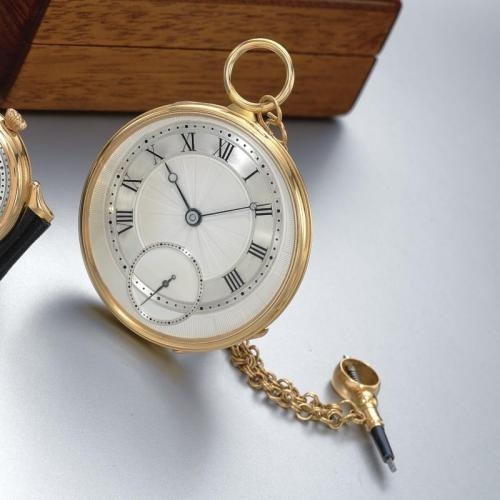
18K pink gold case measuring 52 mm across.
Most tourbillons are driven by the 3rd wheel and thus the tourbillon carriage is considered the "4th wheel" (which is why a seconds indicator is often incorporated into the carriage which while rotating, if there is a 60 division ring on the dial, it will function the same way a hand attached to a 4th wheel is used to measure seconds.)
"In this watch, however, there is a standard 4th wheel the carries the second hand and the tourbillon carriage is driven directly by the 4th wheel at a 1:1 ratio. This arrangement requires less power than normal . . . a much weaker mainspring can be used." This allows for a longer spring to be used, and therefore increases the length the spring can be used giving this watch at least a 56 hour running time while still maintaining a steady amplitude. "The acceleration and deceleration of the tourbillon cage, five times per second, is also more controlled."
"A complicated stopping (hacking) device is employed that stops the seconds hand exactly on the second. This allows very precise synchronization of the watch to a master time signal."
~~~~~~~~~~~~~~~~~~~~~~~~~~~~~~~~~~~~~~~~~~~~~~
Sotheby's Dec. 8, 2006 Auction in New York
Sold No. 5 for a pathetic $54,000 (including buyer's fees). For the 2,000 hours of labour, Gene Clark earned $27 (assuming after taxes). That doe not take into account the capital investment (i.e. gold, silver, etc.)
I bet your average production employee at ETA earns more than $27 per hour. An employee who's skills required are pick up part out of blue bin, move part into the fixture of a machine, close all safety shields, push button, remove part and throw it into green bin which means its ready to move to the next station.
Also at that same sale, Gene Clark No. 1 was also sold.
No. 1 is a 35 mm case 18K gold Pink Gold Minute Repeating Wristwatch.
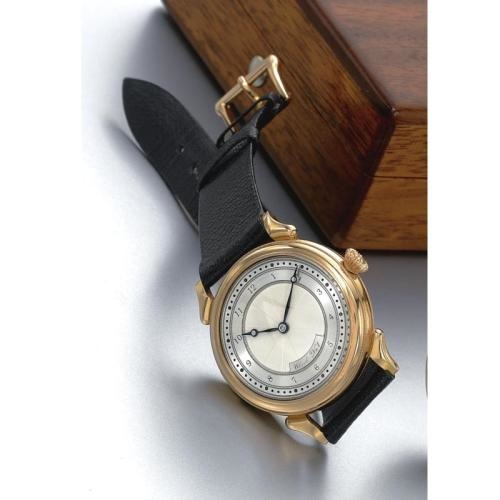
While he did not make every single piece of this watch, he certainly made more parts than ANY maker such as Patek Philippe, A. Lange & Söhne, Breguet or AP do when they purchase an ebauche. He probably made all the jewels my hand, alloyed and made his own case without a $500,000 CNC machine, and made the dial and hands himself.
To prove the effort, this is what Gene Clark said about this watch. "I will never do another wrist repeater again."
His effort brought a winning bid of $32,400. Considering the hours and investment, I'm sure he would have made more money working at a factory job over the same amount of time that it took to make that watch.
To wrap it up: Gene Clark (1948-2006)
No. 1 - 35mm Pink Gold Minute Repeater Wristwatch
No. 2 - Unknown*
No. 3 - Unknown*
No. 4 - Tourbillon Watch w/ Remontoir- Greatest Tourbillon Ever Made
No 5 - Tourbillon w/ 4th Wheel
No 6 - Unknown*
No 7 - Tourbillon w/ Carriage Latch For When Watch Is Powered Down
*The chronograph that Clark reworked with the addition of 61 (every friction point) hand made by him was never identified in the information I have.
During this search I discovered that No. 4 and No. 7 were auctioned and I do not, as of yet, have those catalogues.

This watch, No. 7, was started in December of 1983 and completed in March of 1987.
The carriage & escapement contain 80 parts. Total weight 1/16th of an ounce. Balance screws are 16K gold. Chronometer rating nuts are Iridium. Balance and detent are stainless steel. The balance spring, passing spring and twin detent springs are in Elinvar. Balance rollers are jeweled. Carriage is heat-treated carbon steel. Carriage rotates in 60 seconds EXACTLY. Carriage counterweight is 22K gold. All nickel parts are Rhodium plated. All ruby parts were made by Clark. Balance jewels are permanently fixed. Cap jewels have oil retention grooves. Hairspring stud is adjustable for holding the spring with no distortion. Adjustment for isochronism is also made on this assembly. The escape wheel is hard brass. Two mainsprings wound by a single (female) geared arbors. Both springs are wound at once using a hand-made matching, numbered gold ratchet key. (Uncommon for any modern tourbillon that I am aware of): the watch has a mechanism that locks the balance such that it cannot flop around when not wound.
Stopworks are located on top of the barrel (below the barrel cock, opposite side as the teeth). The escape wheel potence and center wheel run on the same plane to help slim down the watch. Breguet usually made his movements 62 mm in diameter to give the proportional illusion of the watch being thinner. Clark's movement is 58 mm and 10 mm thick (Basically, Clark was able to make the watch a bit thinner than Breguet's tourbillons, and therefore compensated by reducing its diameter . . . in all giving a smaller watch with the same balanced proportions.)
Gene Clark believed that a tourbillon with a detent should NEVER have a regulator.
Plate gilding was done using the gold cyanide process which gives a better look (so they say . . . hopefully that didn't play a part in his death?)
Clark had to make all the gear cutters himself. He made jigs and fixtures for making the jewels. He made his own rose-engine to turn the dial and the hairspring (I have never heard of a rose-engine being used to make a hairspring? If someone can explain, I'd love to hear.) With this watch, the only thing he didn't make was the mainsprings. (Earlier I said he did, but that must have been on one or all of the other watches?)
Figure 2A and 2B "Two views of the initial Clark One Minute Tourbillon, February 1985. Note the carriage and escape wheel have rotated 90 degrees, equivalent to 15'."
Figure 3 "Variation of Peto's Cross Detent escapement on initial configuration of No. 7 tourbillon."
Figure 4 "Close-up of final balance configuration, February 1986. Note the cut-down balance wheel rim. Gilding, signature, numbers and other parts had not been completed."
Figure 5 "Final basic configuration of Clark Tourbillon, February 1986. Note revised barrels and lighter balance."
Figure 6 "The spring detent tourbillon is characteristically larger than an ordinary pocket watch, yet not large in appearance. Overall cased diameter is 63.5 mm."
Figure 7 "Below tourbillon carriage"
Figure 8 "Engraved area of back cover is sterling silver. Bezels and center are 19K gold."
Figure 9 "Engraved areas of the case band and back cover are sterling silver. Bezels and center, pendant and bow are 19K gold alloyed by Clark"
Figure 10 "Angular perspective of tourbillon. Note carriage is in the locked position
Figure 11 "Inside back cover is signed "Clark No. 7 USA"
Figure 12 "Dial is (silver) whitened then lacquered
Figure 13 "Maker's signature next to the VIII on the dial; USA is engraved next to the III."
(no pics)
Figure 14 "Breguet-style "tipsy" ratchet key. Bottom end winds. Top end sets the hands. Center is a large jewel. "No. 7" is engraved on band."
Figure 15 "Gene Clark at his bench, his tourbillon watch before him."
Note: In References, no books, periodicals, etc. on Gene Clark are included.
~~~~~~~~~~~~~~~~~~~~~~~~~~~~~~~~~~~~~~~~~~~~~
February 1990 NAWCC Bulletin
Back cover: Picture of the tourbillon carriage of "Gene Clark's "No. 4" which is currently in the making. The diameter of the outer gear is 31 mm."
Note: This is the most beautiful tourbillon carriage I have ever seen in my life. The remontoir is incorporated within the carriage.
~~~~~~~~~~~~~~~~~~~~~~~~~~~~~~~~~~~~~~~~~~~~~~
April 1992 NAWCC Bulletin
Picture of No. 4 on Front Page with back open showing tourbillon and barrel. Also, chain and ratchet key.
"The Almost Lost Art of Breguet Part II (The Clark Constant Force Tourbillon Watch" by Peyton Autry
(Note: Clark's numbering system is not chronological. No. 7 was completed in 1987 while No. 4 was completed in 1991.)
Derrek Pratt is mentioned as another Breguet-level watchmaker. "We will undoubtedly see and hear more of Derek Pratt in the future." I really haven't heard much about him, does anyone know if there have been any internet articles that show his work? Another Breguet-level watchmaker that I think should get a spot on Tempered is Christian Klings. In a world of watchmaking talent, Christian Klings is definitely near the top.
Okay, on to No. 4:
65mm case with split gold chain and ratchet Breguet-style key.
Whereas Clark estimated No. 7 to have taken him 4,000 hours. No. 4 is estimated at a mind-boggling 9,100 hours.
Single barrel is wound by inserting the male key into the square next to the spring barrel and turning counter-clockwise. The watch is set by placing the female part of the key onto the square on the center wheel cock.
The gear-toothed tourbillon carriage rotates once every 4 minutes. Part of the 4-minute rotation reasoning is that the single barrel would not have been able to store enough energy for a 1 minute tourbillon and still have a reasonable endurance level (36 hours, I think?)
The case back, case band, bezel, pendant and bow are all 18K pink gold -alloyed and rolled by Clark himself.
Unlike No. 7's large Center and Third wheels, the power-train transmission is done through at least 3 smaller wheels.
The Tourbillion cock is a large all brass piece with "No. 4" engraved in script on it.
The major wheel cock is also brass and has the name "Clark" engraved in script on it.
The barrel cock has "USA" engraved in script on it.
The watch has an Up/Down indicator (the same style as Daniels and Smith)
The Hour hand has an arrow at the end while the Minute hand is a simple tapered straight hand. (Except for the seconds hand, the hands are Daniels hands . . . one more proof of who a major influence on Clark was while he was making the tourbillon watches).
There is a moonphase indicator above the hour/minute track (which is small and centered down and to the left. The up/down indicator is very attractive in it's location to the right in the largely 'empty' right side of the dial.
The dial is whitened silver.
Everything in the case is made of rolled stock, no castings. "The use of rolled stock makes for a very tough, springy case. While you would think the case is a simple affair to make, it was actually extremely difficult because it is so large and requires many solders each melting at a lower temperature than the last. If too much heat is applied, you will simply melt the area that has already been soldered.
(Note: I highly recommend the DVD about Martin Matthews. He is an English, 4th generation case maker who uses basically all 18th century tools and technology. Just Google his name and you will find a place to buy it from. While it is never said, my guess is that George Daniels learned what he knows about case making from Martin Matthews. It is well worth the money.)
There are lots of beautiful pictures of the tourbillon, but how I long for super-high resolution pictures so that you can get "inside" it because it is so complex I find it hard to fully understand how it works.
The remontoir entire cycle of cocking and releasing the constant force spring and impulse is done in a few hundredths of a second.
"When you see its jeweled perfection in motion under a loupe, one is well nigh overcome by the ingenuity of its human creation."
A quote from Gene Clark on the making of No. 4:
"The were, of course, many problems with it, as any such thing would have. The biggest problems were the speed of some of the components - some must be very rapid, and some must be very fast for a time, and then fall off in speed near the end of their function. And example is the cocking of the escapement. It would tend to cock perfectly, but so fast the primary detent did not have time to fall and catch the constant force lever. To overcome this, I had to use a slightly different form on the cocking wheel teeth, and also re-design the cocking jewel in the constant force lever. This allows it to cock in exactly the same way, but holds the constant force lever in the cocked position a tiny bit longer so the primary detent has a bit more time to fall safely. This whole thing could be accomplished by tightening the up the primary detent spring a bit, but this would change the force necessary for unlocking, which is very desirable, so I had to use this method to slow the components down.
The case was also a bit of a difficult job, as it is large, and so much soldering there was always a great danger of warpage, and much of it is with a very high temperature solder. Everything in the case is rolled, no castings. I rolled the gold from my own alloy. The use of rolled stock makes for a tough, springy case. A case is, of course, a very simple affair, but they do take a lot of time to make.
I personally made everything in the watch with the following exceptions. Lynton McKenzie did the engraving. Sergio Brecher in New Jersey supplied the glass for the case - a fine craftsman whose work I greatly appreciate. I fitted a Swiss-made hairspring to it, but did not actually make the spring itself. I ended up making the mainspring myself, drawing it from round wire" - Gene Clark
When asked him to identify what the prime requisites of a world class watchmaker. He first replied that, "A bit of insanity can be very comforting at times! A good library is necessary, not only on watchmaking and repairing, but also on fine watches and tools. Also, 'machinery' is rather important, but the most important things are patience and experience. Without patience and experience, one cannot make a decent piece, but with patience and experience one can improve his work with each piece. Every watch, and every piece of a watch must be better than the last one. The desire to improve has to be the most important aspect of all. In this day and age those bits of simple advice, given the thought they deserve, have a depth of wisdom any aspiring maker of the Breguet arts must either be considered, and do -- or should cast aside those his aspirations." - Gene Clark
In my opinion (for whatever that's worth), No. 7's tourbillon with its insanely complex constant force escapement is the greatest tourbillon ever made and surpasses any tourbillon watch George Daniels has ever made! If F.P. Journe, Roger Smith, Christian Klings, (enter name here) make "Corvette Tourbillons", No. 7's tourbillon is an "Enzo Ferrari tourbillon"
~~~~~~~~~~~~~~~~~~~~~~~~~~~~~~~~~~~~~~~~~~~~~
January 1998 Horological Times - Front Cover features #5.
"A One Minute Tourbillon By Gene Clark" by Ron DeCorte
No. 5 was completed in 1994 at a cost of approximately 2,000 hours.
Once again, everything except hairspring was made by Gene Clark.
18K pink gold case measuring 52 mm across.
Most tourbillons are driven by the 3rd wheel and thus the tourbillon carriage is considered the "4th wheel" (which is why a seconds indicator is often incorporated into the carriage which while rotating, if there is a 60 division ring on the dial, it will function the same way a hand attached to a 4th wheel is used to measure seconds.)
"In this watch, however, there is a standard 4th wheel the carries the second hand and the tourbillon carriage is driven directly by the 4th wheel at a 1:1 ratio. This arrangement requires less power than normal . . . a much weaker mainspring can be used." This allows for a longer spring to be used, and therefore increases the length the spring can be used giving this watch at least a 56 hour running time while still maintaining a steady amplitude. "The acceleration and deceleration of the tourbillon cage, five times per second, is also more controlled."
"A complicated stopping (hacking) device is employed that stops the seconds hand exactly on the second. This allows very precise synchronization of the watch to a master time signal."
~~~~~~~~~~~~~~~~~~~~~~~~~~~~~~~~~~~~~~~~~~~~~~
Sotheby's Dec. 8, 2006 Auction in New York
Sold No. 5 for a pathetic $54,000 (including buyer's fees). For the 2,000 hours of labour, Gene Clark earned $27 (assuming after taxes). That doe not take into account the capital investment (i.e. gold, silver, etc.)
I bet your average production employee at ETA earns more than $27 per hour. An employee who's skills required are pick up part out of blue bin, move part into the fixture of a machine, close all safety shields, push button, remove part and throw it into green bin which means its ready to move to the next station.
Also at that same sale, Gene Clark No. 1 was also sold.
No. 1 is a 35 mm case 18K gold Pink Gold Minute Repeating Wristwatch.
While he did not make every single piece of this watch, he certainly made more parts than ANY maker such as Patek Philippe, A. Lange & Söhne, Breguet or AP do when they purchase an ebauche. He probably made all the jewels my hand, alloyed and made his own case without a $500,000 CNC machine, and made the dial and hands himself.
To prove the effort, this is what Gene Clark said about this watch. "I will never do another wrist repeater again."
His effort brought a winning bid of $32,400. Considering the hours and investment, I'm sure he would have made more money working at a factory job over the same amount of time that it took to make that watch.
To wrap it up: Gene Clark (1948-2006)
No. 1 - 35mm Pink Gold Minute Repeater Wristwatch
No. 2 - Unknown*
No. 3 - Unknown*
No. 4 - Tourbillon Watch w/ Remontoir- Greatest Tourbillon Ever Made
No 5 - Tourbillon w/ 4th Wheel
No 6 - Unknown*
No 7 - Tourbillon w/ Carriage Latch For When Watch Is Powered Down
*The chronograph that Clark reworked with the addition of 61 (every friction point) hand made by him was never identified in the information I have.
During this search I discovered that No. 4 and No. 7 were auctioned and I do not, as of yet, have those catalogues.
-
bryanhiler
- Posts: 63
- Joined: Wed Dec 13, 2006 10:18 am
- Location: Notre Dame, Indiana
by Philip Bayer » Fri Jan 25, 2008 9:38 am
While it is never said, my guess is that George Daniels learned what he knows about case making from Martin Matthews.
Daniels discusses his experiences in learning casemaking in "Watchmaking," where he struck a deal with Mr. A.T. Oliver of Clerkenwell to teach him casemaking for a sum of money equal to that which it would have cost him to have had Mr. Oliver make the case for him...
-
Philip Bayer
- Posts: 8
- Joined: Tue Mar 20, 2007 9:59 am

by bryanhiler » Fri Jan 25, 2008 12:48 pm
You're right about the casemaking comment, but wasn't that story in his autobiography, not in Watchmaking? I had forgotten about that. But whether he learned from Matthew or not, I find it hard to believe they aren't friends. Thanks for correcting that.
~Bryan
~Bryan
-
bryanhiler
- Posts: 63
- Joined: Wed Dec 13, 2006 10:18 am
- Location: Notre Dame, Indiana
by bryanhiler » Fri Jan 25, 2008 1:02 pm
Curtis,
If you are really interested in doing a project on Gene Clark, please write to me bryanhiler@hotmail.com so that we can start discussing some ideas on how it could work. I am dead serious that Clark's No. 4 contant-force tourbillon is of such high quality and insane complexity, that some kind of project needs to be done. I would like to discuss it without having to do it over this forum.
Drop me a note at your convenience.
~Bryan
If you are really interested in doing a project on Gene Clark, please write to me bryanhiler@hotmail.com so that we can start discussing some ideas on how it could work. I am dead serious that Clark's No. 4 contant-force tourbillon is of such high quality and insane complexity, that some kind of project needs to be done. I would like to discuss it without having to do it over this forum.
Drop me a note at your convenience.
~Bryan
-
bryanhiler
- Posts: 63
- Joined: Wed Dec 13, 2006 10:18 am
- Location: Notre Dame, Indiana
by bryanhiler » Sun Jan 27, 2008 7:02 pm
I've got all the pictures ready to go, but I am not sure how to post them here. In the past I've posted pictures that were on the internet, so that wasn't very difficult, but these are all in my Pictures folder.
Would you mind giving me an example, because everything I've tried has not worked.
Sorry!
Also, Curtis, I checked my email but there was nothing?
Sorry to make this into such a long drawn out process, but to have the No. 4 tourbillon as your computer's background will be well worth it. The next step will be for someone to explain step-by-step how it works. I'm not too proud to admit that it loses me.
~Bryan
Would you mind giving me an example, because everything I've tried has not worked.
Sorry!
Also, Curtis, I checked my email but there was nothing?
Sorry to make this into such a long drawn out process, but to have the No. 4 tourbillon as your computer's background will be well worth it. The next step will be for someone to explain step-by-step how it works. I'm not too proud to admit that it loses me.
~Bryan
-
bryanhiler
- Posts: 63
- Joined: Wed Dec 13, 2006 10:18 am
- Location: Notre Dame, Indiana
by Curtis » Sun Jan 27, 2008 7:29 pm
Hi Bryan,
I've just emailed you again - to hotmail. If you don't receive again please email me. curtis@tempered-online.com
To post a pic you need to have it hosted somewhere and then use the following tag [img]address%20to%20where%20pic%20is%20hosted[/img]
Cheers,
Curtis
I've just emailed you again - to hotmail. If you don't receive again please email me. curtis@tempered-online.com
To post a pic you need to have it hosted somewhere and then use the following tag [img]address%20to%20where%20pic%20is%20hosted[/img]
Cheers,
Curtis
-
Curtis
- Site Admin
- Posts: 679
- Joined: Mon Oct 23, 2006 9:33 pm
- Location: New Hampshire, USA
24 posts
• Page 1 of 2 • 1, 2
-
- Who is online
-
- Users browsing this forum: No registered users and 2 guests
